Everest's Helicopter Problem: When Rescue Becomes a Business
After a fatal collision near Everest, Nepal's helicopter industry faces renewed scrutiny over alleged rescue fraud, commercial tourism and growing concerns among Khumbu communities.


The fatal collision of two helicopters near Everest has renewed attention on an industry that saves lives, transports tourists and connects remote communities. But allegations of organised rescue fraud and growing opposition in the Khumbu reveal a deeper question: who benefits when access to the world's highest mountain becomes a business in itself?
A Collision in the Khumbu
On the morning of 3 November 2026, two helicopters approached a landing area at Pheriche, a Himalayan settlement more than 4,300 metres above sea level, along the trekking route to Everest Base Camp. At approximately 8:11 a.m. local time, the aircraft collided while attempting to land, killing one passenger and injuring three others, according to subsequent Nepalese police reports.
The helicopters were operated by Fishtail Air and Air Dynasty. The Fishtail aircraft had departed Gorakshep carrying two foreign passengers, while the Air Dynasty helicopter had flown from Lukla on a cargo operation. The passenger who died was identified as 47-year-old Indian national Vasanth Kumar Balaramudu. The injured included a New Zealand passenger and the pilots of both helicopters, according to OnlineKhabar's reporting.
Video footage of the accident showed the helicopters coming into contact just above the landing area. Nepal's Civil Aviation Authority opened an investigation, with its director general suggesting that miscommunication between the pilots may have contributed to the collision. As The Kathmandu Post reported, Pheriche lies outside the coverage of Lukla Airport's air traffic control tower, requiring pilots to coordinate their movements directly. The suggestion remains preliminary, and the cause of the accident has not been established.
Footage of the helicopter collision at Pheriche, Nepal, on 3 November 2026. Video: Greater Kashmir / YouTube. The cause of the collision remains under investigation.
Helicopter operations in the Himalayas are demanding. Thin air reduces aircraft performance, steep terrain complicates approaches, and rapidly changing weather can leave little margin for error. Yet helicopters have become indispensable to the Everest region, carrying supplies, transporting visitors and evacuating people for whom a journey on foot could be dangerously slow.
The collision does not establish that helicopter overuse, inappropriate commercial activity or regulatory failures caused the accident. But it has brought renewed attention to an aviation industry already facing difficult questions about its expanding commercial role, its relationship with local communities and the integrity of the rescue services on which so many people depend.
When the Journey Becomes Optional
For most trekkers, reaching Everest Base Camp is a journey measured in days rather than hours. From Lukla, the route passes through Namche Bazaar, monasteries, villages and high-altitude settlements before reaching the glacial landscape beneath the world's highest mountain. Along the way, visitors acclimatise, experience the changing terrain and contribute to a network of local businesses that has developed around trekking.
That journey is central to the Khumbu's tourism economy. Lodges, restaurants, guides, porters and small businesses benefit from visitors travelling through the region, often spending nearly two weeks completing a return trek. The experience is not simply about reaching a particular viewpoint. Much of its cultural and economic value lies in the places and people encountered along the way.
Helicopters have introduced a different way of experiencing Everest. Scenic flights offer aerial views of the mountains, while private transfers can shorten itineraries or eliminate portions of the return journey. For travellers with limited time, these services provide an alternative to conventional trekking. They also make the region accessible to visitors who might otherwise never undertake a demanding journey at altitude.
There is nothing inherently improper about purchasing a helicopter flight. Tourism has always evolved with improvements in transport, and the ability to experience a mountain landscape differently does not automatically make that experience less legitimate. Helicopters also generate employment and revenue, while providing transport options that can be useful to residents as well as visitors.
The more difficult question concerns the boundary between commercial convenience and medical necessity. A tourist who pays for a private helicopter transfer is purchasing a service. A trekker evacuated because of a medical emergency is relying on a system intended to protect life and health, often with the costs covered by travel insurance.
The distinction should be straightforward. Yet investigations in Nepal suggest that, in some cases, it has become a lucrative opportunity for manipulation.
The Business of Being Rescued
In March 2026, Nepalese prosecutors filed charges against 32 individuals following an investigation into an alleged network of fraudulent helicopter rescues and insurance claims. The Central Investigation Bureau of Nepal Police had recommended prosecuting 33 people, but one was excluded from the case filed in Kathmandu District Court. The accused included individuals connected to helicopter companies, trekking agencies, rescue coordination services and hospitals.
According to investigators, the alleged scheme exploited the difficulty of verifying medical emergencies in remote mountain environments. Tourists experiencing relatively minor symptoms were reportedly encouraged to seek helicopter evacuations, while others were allegedly frightened into believing their condition was more serious than it was. Investigators also examined allegations that tourists had deliberately been made ill to justify evacuations, including cases involving adulterated food. These claims remain allegations and should not be treated as established conduct in every reported case.
The financial arrangements described by investigators were equally troubling. Police alleged that passenger manifests were falsified, ordinary charter flights were represented as emergency rescues, and multiple insurance claims were submitted for passengers who had travelled together on a single helicopter. Hospitals were accused of supporting some claims through exaggerated treatment records and inflated bills.
One case documented in the investigation illustrates the alleged practice. Four tourists travelled on the same helicopter, on the same date, under a single flight manifest. Yet separate rescue claims were reportedly submitted, producing a combined helicopter bill of US$31,100, alongside a further US$11,890 in hospital charges. According to The Kathmandu Post's investigation, police also described commission arrangements in which hospitals allegedly paid trekking companies and rescue operators percentages of insurance reimbursements in exchange for patient referrals.
The broader investigation involved more than US$19.6 million in alleged insurance claims. That figure does not represent a judicially established fraud loss, and the criminal charges themselves are not proof of guilt. Nevertheless, the evidence described by investigators raises serious questions about how medical decisions, commercial referrals and insurance billing became intertwined.
Perhaps the most revealing aspect is that the controversy was not new. Nepal's rescue-fraud problem first attracted major attention in 2018, prompting a government investigation and recommendations for reform. Yet years later, police were again examining allegations of fabricated emergencies, falsified documentation and inflated claims. The recurrence of similar allegations raises questions about the effectiveness of oversight and the incentives embedded within the wider rescue system.
For a trekker suffering from dizziness, nausea or breathlessness at altitude, the distinction between genuine medical danger and commercial manipulation can be difficult to judge. Acute mountain sickness may progress into a life-threatening condition, and prompt descent or evacuation can be essential. Visitors must often rely on guides, medical professionals and rescue coordinators to interpret symptoms and recommend appropriate action.
That reliance creates a particular vulnerability. When the person recommending an evacuation, arranging a helicopter or referring a patient for treatment may also benefit financially from the decision, the potential conflict of interest is significant. Questionable claims can damage confidence in the system and complicate the work of those providing genuine emergency assistance.
The problem is not that rescuing people has a cost, or that aviation companies must operate commercially. It is what happens when the financial rewards associated with an emergency create incentives to manufacture one.
The Communities Beneath the Flight Paths
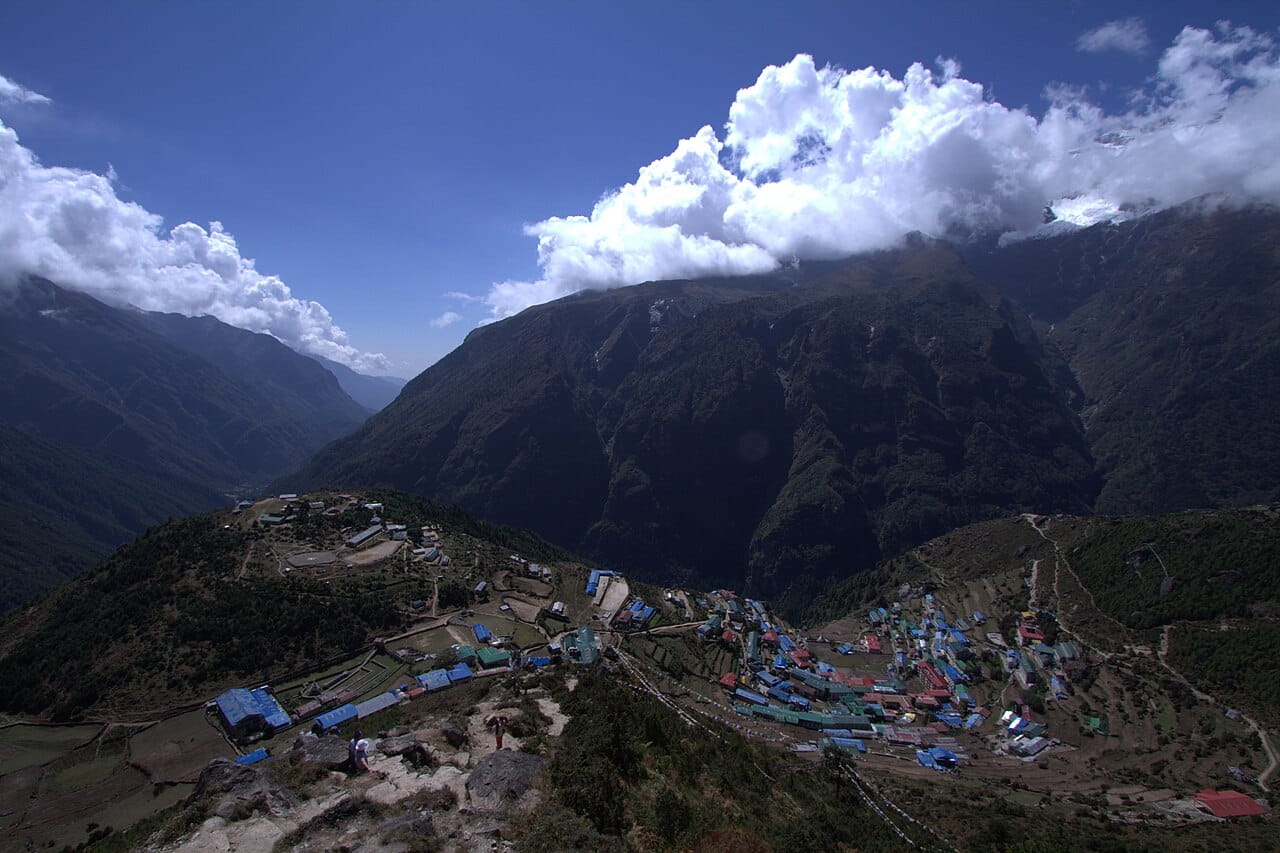
While investigators were examining alleged rescue fraud, another controversy had been developing across the Khumbu. Residents, conservation officials and local authorities were questioning the growth of commercial helicopter tourism, particularly its effects on wildlife, noise levels and the businesses that depend on conventional trekking.
The scale of aviation activity helps explain the concern. According to Sagarmatha National Park information officer Bibek Baiju, cited in Mongabay's reporting, approximately 5,600 helicopter rides were recorded in the Everest region during 2024. The figure is not a count of unique passengers or exclusively sightseeing operations, but it illustrates the scale of activity in the mountain landscape.
Residents described the disruption caused by aircraft noise, while conservation officials raised concerns about its effects on wildlife. Himalayan tahr and Himalayan goral inhabit the wider ecosystem, and park officials have reported animals being startled by low-flying helicopters. However, publicly available reporting does not establish a comprehensive, independently quantified assessment of the ecological damage attributable specifically to helicopter operations. The concerns warrant investigation, but should not be confused with definitive measurements of environmental harm.
The economic debate is equally complicated. Traditional trekking distributes visitor spending along the trail, supporting communities such as Namche Bazaar, Tengboche and Pangboche. Helicopter transfers can bypass these settlements, reducing opportunities for businesses that rely on overnight stays, meals and porter services. Local residents have argued that the benefits of helicopter tourism are concentrated among aviation operators while the environmental costs are experienced more widely.
Yet the relationship between helicopter activity and lost income is not necessarily one-to-one. Some passengers might never have undertaken a trek, meaning their spending represents additional tourism rather than revenue diverted from local businesses. Helicopters also employ pilots, engineers and ground crews, and their cargo operations support remote settlements. The question is therefore not simply whether helicopters generate economic value, but how that value is distributed and whether the communities living beneath the flight paths share adequately in the benefits.
These tensions became particularly visible in December 2024, when Sagarmatha National Park and Khumbu Pasang Lhamu Rural Municipality moved to restrict commercial sightseeing flights from January 2025, while exempting emergency rescues. Nepal's aviation regulator challenged the park's authority to impose such restrictions, and the park subsequently allowed authorised flights under existing regulations. The municipality remained opposed, creating a dispute between local government, conservation authorities and the national aviation industry.
As The Kathmandu Post documented in January 2025, the dispute extended beyond conservation into questions of jurisdiction, tourism revenue and the authority to regulate aviation in the national park. Subsequent reporting indicates that the controversy has continued, although the precise enforcement status of sightseeing restrictions in November 2026 remains unclear.
For local communities, the issue extends beyond aircraft noise. It concerns who has the authority to determine how the mountains are used. Aviation regulators oversee flight operations, national park officials are responsible for conservation, and tourism businesses depend on access to the region. Residents, meanwhile, live with the consequences of decisions made by all three.
The resulting dispute reveals a familiar tension in mountain tourism: the landscapes that attract visitors are also places where people live and work. Their interests do not always align with the priorities of those who profit from bringing visitors in.
The Rescue That Must Remain
It would be tempting to look at the fraud allegations, environmental complaints and fatal collision at Pheriche and conclude that Everest simply needs fewer helicopters. But such a conclusion would overlook why helicopter aviation became essential to the Khumbu in the first place.
The region's remoteness makes rapid medical evacuation especially valuable. Severe altitude illness, traumatic injuries and other emergencies can demand urgent treatment that cannot be reached quickly on foot. Helicopters also transport supplies, support mountain operations and provide an important connection for communities living beyond conventional road networks. For people facing genuine emergencies, access to a helicopter can mean the difference between survival and tragedy.
This makes regulation more complicated than imposing a blanket restriction. Limiting unnecessary sightseeing flights may address some concerns about noise and conservation, but rules must preserve access for medical evacuations and essential transport. Equally, the importance of emergency aviation should not be used to justify every form of commercial helicopter activity without scrutiny.
The rescue-fraud allegations create another difficult balance. More rigorous verification of medical claims could reduce opportunities for abuse, but excessive administrative requirements could delay legitimate evacuations. A system designed to prevent fraudulent rescues must not make genuine rescues harder to obtain when minutes or hours matter.
The Pheriche collision adds the separate question of operational safety. Whatever investigators ultimately determine, aviation in the Himalayas demands appropriate procedures, competent crews and effective communication. Those requirements apply whether a helicopter is carrying tourists, cargo or an injured climber. It would be wrong to assume that commercial helicopter tourism caused the collision, just as it would be wrong to dismiss wider concerns about aviation activity because the accident's cause remains unknown.
The challenge is not to decide whether helicopters are good or bad for Everest. It is to recognise that rescue, cargo transport, sightseeing and private transfers serve different purposes and may require different forms of oversight. Treating them as interchangeable obscures the distinctions that effective regulation needs to preserve.
What Kind of Everest Are We Creating?
Everest has never been isolated from commerce or technology. Modern expeditions depend on sophisticated equipment, weather forecasting, communications, organised logistics and the expertise of local workers whose contributions make access to the mountain possible. Helicopters are part of that evolving infrastructure, and their presence is not inherently incompatible with the character of the Himalayas.
But technology does more than make an existing experience easier. It changes how people interact with a place, where money flows and whose interests shape its future. When visitors can bypass days of trekking, some of the economic value of the journey may move away from communities along the trail. When emergency evacuations become financially lucrative, the integrity of medical decisions becomes particularly important. And when aircraft operate repeatedly over protected landscapes, the costs of that activity may be experienced by people who have little influence over the flights themselves.
None of this means that Everest should remain accessible only to those willing or able to reach it on foot. Such an argument would overlook the legitimate benefits of aviation and the needs of people who live in the region. Nor does it follow that every helicopter transfer is irresponsible, every rescue claim suspicious or every commercial operator indifferent to conservation. The available evidence does not justify those conclusions.
What it reveals instead is a mountain region struggling to reconcile several competing purposes for the same technology. Helicopters can be lifesaving instruments, essential transport links, tourist attractions and profitable commercial assets. Problems arise when the interests associated with one purpose are allowed to obscure the responsibilities attached to another.
The fatal collision at Pheriche deserves to be investigated on its own terms, without becoming an illustration of wrongdoing that has not been established. Nepal's rescue-fraud allegations likewise require judicial scrutiny, while the concerns of Khumbu communities deserve serious consideration supported by credible environmental and economic evidence.
Yet together, these issues expose a question that reaches beyond any single accident, investigation or regulatory dispute: who should benefit from the increasing accessibility of the world's highest mountain, and who should bear the consequences?
Helicopters have transformed Everest, making it more accessible and providing an indispensable means of rescue. Whether that transformation ultimately serves the region as well as it serves those who fly through it will depend not simply on how many helicopters take to the skies, but on the decisions governing why they fly, who profits and who gets a say.
Sources
- The Kathmandu Post — Indian national killed in helicopter collision near Everest, 3 November 2026
- OnlineKhabar — Two pilots among three injured in Pheriche collision, 3 November 2026
- The Kathmandu Post — Nepal charges 32 in fake rescue scam, 23 March 2026
- The Kathmandu Post — Inside Nepal's fake rescue racket, 27 March 2026
- Mongabay — Helicopter tourism affecting Sherpas and wildlife, 10 February 2025
- The Kathmandu Post — Local and federal governments dispute Everest helicopter restrictions, 9 January 2025